Wednesday, July 09, 2008

Purchase grass-fed beef at a farmers market


Eat locally grown food.
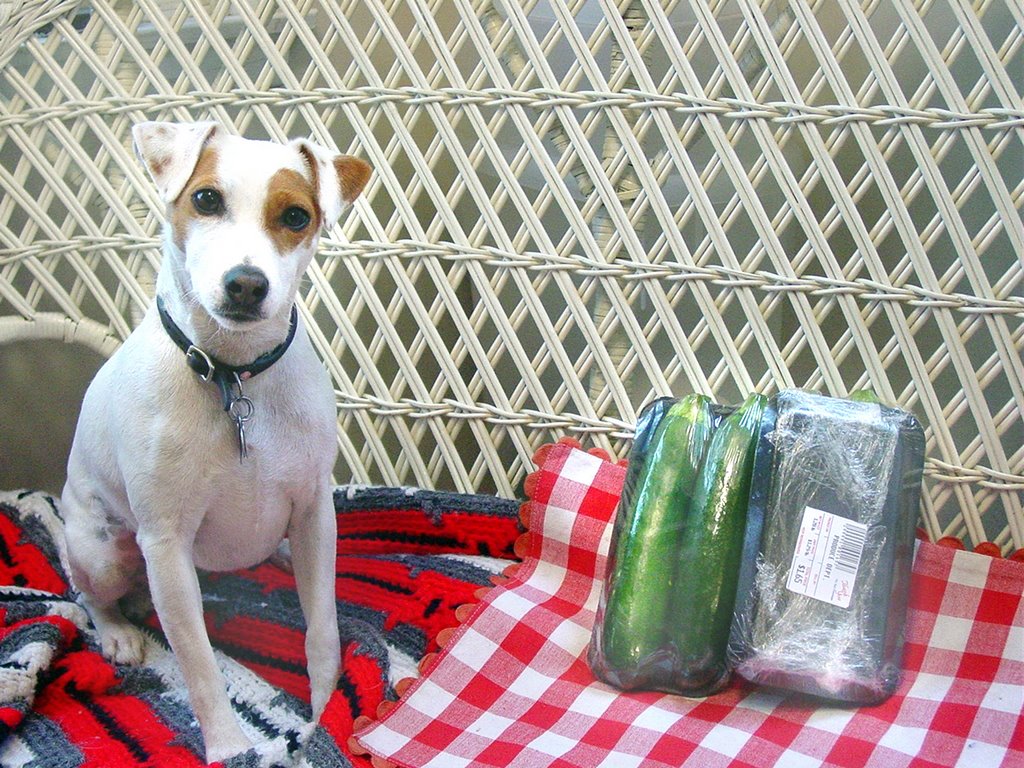
This ground beef was purchased at the Farmers Market in East Hillside from Green Pastures. Green Pastures Dairy is located in Carlton, Minn. and the cattle eat grass.

It is kinda expensive, but most Americans eat too much red meat. I made hamburgers tonight. It would have been easy for my husband to eat a one-half pound burger, but I made him a quarter-pounder and made sure he had lots of extras to fill him up.

Learn more about grass-fed beef at Eat Wild.

Green Pastures will be having an open house on Aug. 2nd.


Here is their contact information:
Green Pastures Dairy
2353 Bromfield Road
Carlton, MN 55718
(218) 384-4513
cheese@greenpasturesdairy.com

We also sell our products at the Duluth Farmers Markets every Saturday,
from June through October.

Duluth Farmers Market
14th Ave. E. & 3rd St.
7:00 AM - 12:00 PM

Monday, July 07, 2008

Poison yards? Keep children and pets of the grass for their own safety


Prof. Cricket and I walk at least two times a day. I had her pose by this sign. I suppose I should be careful, it says to keep pets and children off because the lawn has just been sprayed with a weedkiller.

Do you really want you yard to be poisonous to children and small furry animals?

What do you do to keep your yard free from weeds? Please post your comments.

Thursday, July 03, 2008

Save Energy, clean behind your refridgerator


When I was a kid, my mom told a story on herself. As a young women her refrigerator did not work so she called a repairman. He came over and vacuumed the back side of her refrigerator. She said she was embarrassed, but it did fix her refrigerator.

A refrigerator uses about 15 % of your household electricity.

A couple years ago I went to the Green Energy Fair in Duluth and I listened to a talk by Tony Mancuso. (He figures out lots of innovative ways to save energy for St. Louis County.) He also talked about how you could increase the efficiency of your refrigerator if you clean behind it, and he had some examples of brushes you could use. So, I purchased this nifty brush that Prof. Cricket is posing by, but I never used it.

About a month ago our refrigerator started making all kinds of funny noises. It was very loud. So I spent a good hour using the brush behind the coils and especially the areas close to the floor and near the fan.

Now our refrigerator isn't making any more funny noises and it is quiet.

Here is a link on how to clean the coils for your refrigerator
http://www.ehow.com/how_2026039_save-energy-fridge.html

This above example talks about removing a plate. I did not do that.

Here is another blog, Brave New Leaf, with a post about how to clean the coils:
http://www.bravenewleaf.com/environment/2008/03/scary-and-new-c.html

Monday, June 23, 2008

Alternative gift registry for weddings, babies, etc


This is from New American Dream
Why Alternative Gifts?
Do you want to plan an event that emphasizes time spent with loved ones and de-emphasizes store-bought gifts? Do you want to give a special gift to someone you love that focuses on the bond you share, rather than something that costs a bundle and may not be what they really want?
We all love giving and receiving gifts; it’s important to our culture and good for the spirit. When the gifts we buy don’t match our values, however, they can distract from, rather than deepen, the meaning behind an event, despite the best intentions of those involved. The cost to gift-givers—not to mention the environmental impacts—also adds up quickly.
Fortunately, for many brides, grooms, parents-to-be, and other gift recipients, less truly is more. By encouraging non-material, second-hand, homemade, and environmentally friendly gifts, we seek to continue the proud tradition of gift-giving while helping celebrants focus on what matters most: a joyous commemoration with loved ones that honors the important moments in their lives.
Creating a registry and choosing a gift, of course, is highly personal. We have offered a number of green suggestions, but celebrants can fill in their own ideas and link to products outside this site to offer the widest and most meaningful gift selection possible.
To get started just click here to create a registry, or click here to find your loved one’s registry.


Sunday, June 22, 2008

Electric Cars You Can Buy Now

Electric Cares You can Buy Now

http://finance.yahoo.com/loans/article/105265/5-Electric-Cars-You-Can-Buy-Now

Saturday, June 21, 2008

American's first carbon tax

My friend Wendy, sent me this information from the
Post Carbon Cities Weekly Blog

America's first carbon tax
Published 21 May 2008 by ABC News "Science and Society" blog (original article Not content to wait for federal carbon regulation, San Francisco's air quality authority is putting in place the U.S.'s first carbon tax. They decided on 20 May 2008 to place a price of 4.4 cents per ton of CO2 released into the atmosphere -- which is not much, as some have pointed out, but a start.

Monday, June 09, 2008

Wednesday, June 04, 2008

To reduce waste stay organized

Staying organized is a challenge for me. It seems I have a million things to do. When a person is so busy it is easy to want to eat out, and eat fast food.

I rarely eat at a fast food joint.  I want to eat healthy food and I don't want to create more waste.

Last night were busy and my husband was very hungry. If I had been better organized, I would have had something good ready for him to eat, but I didn't.

He wanted a burger. The last thing I want is a fast food burger. We did decide to go to Taco John's. I think I haven't been their in years.

We both ordered salads. He had a taco (hamburger) salad; I had a chicken salad.  I was disappointed in myself be it was served on disposable plastic plates with plastic forks.

We thought it would be more healthy if we ordered one root beer and one water and shared. Well, the root beer came in a plastic cup and the water came in a Styrofoam cup.  A couple of years ago I gave up Styrofoam. When I mentioned the Styrofoam to my husband, he seemed perturbed. I think he wishes I would loosen up a bit on my standards.

I noticed they also had paper cups. I suppose if you order water you get Styrofoam so it doesn't screw up their count on sold soda pop with the supply company.

Today I brought my own cup to a coffeehouse.  I could have done that yesterday if I would have known that it was going to be in Styrofoam.

Friday, May 30, 2008

Energy Fair in Wisconsin, June 20-22


Don't miss the Midwest Energy Fair June 20 thorugh the 22nd in Custer Wisconsin.
Energy Fair Keynotes & Workshops

Keynotes
Friday, June 20 - Jason Walsh,
Green For All Jason Walsh serves as the National Policy Director for Green For All. Green For All's goal is to help build a green economy strong enough to lift people out of poverty. Jason was previously State Policy Director for The Workforce Alliance, a national coalition advocating for public policies that invest in the skills of America's workers, where he worked on a range of federal and state workforce development legislation, including the Green Jobs Act.

Saturday, June 21 - Jim Hightower
National radio commentator, writer, public speaker, and author of the forthcoming book, Swim Against The Current: Even A Dead Fish Can Go With The Flow, Jim Hightower has spent three decades battling the Powers That Be on behalf of the Powers That Ought To Be - consumers, working families, environmentalists, small businesses, and just-plain-folks.

Meet Jim, and sign up for his newsletter The Hightower Lowdown at his website.

Sunday, June 22 - Eco-Municipality Expert Torbjörn LahtiTorbjorn Lahti is the project director for Sustainable Robertsfors, a five-year sustainable community demonstration project. He was the project planner for Sweden's first eco-municipality, and is co-author of The Natural Step for Communities. Lahti will also present an extended workshop at the Energy Fair for individuals interested in a more in-depth study of eco-municipalities.

Interested in eco-municipalities? Purchase The Natural Step through the MREA Marketplace.

Duluth Hospital serves good food "organic" food


Duluth hospital serves good food


"We're starting to see the health-care profession is starting to take food nutrition seriously," Harvie said, beyond just having dieticians advise that people eat nutritiously. "They're trying to change the food system, the way our food is produced and distributed."As more hospitals demand organic and locally grown foods, suppliers are beginning to offer it, he said.Branovan has witnessed that happen.

Click here to go to the Duluth News Tribune article by Patrick Garmoe

Please leave a comment if you have stayed and St. Luke's and what you thought about the food.

Monday, May 26, 2008

Chickens in the City?


Today, Memorial Day, I broke a couple of my own rules. I shopped on a national holiday and I purchased a bunch of non-organic food. (We were going to have a cook-out with our neighbor, but it is raining. I am going to make bison burgers. Which I will post about some day to talk about the benefits of this type of meat.)
I went to Whole Foods Co-op at 4 p.m., but they had closed a 3 p.m. So I went to Super One Foods. I almost purchased some of the regular eggs, but they had some eggs in a see-three plastic egg crates that were "cage-free," so I purchased those instead. It bothered me that the egg crate is made of plastic. When I got home the crate said that it was made from recycled plastic.
Here is a chance for you to learn about the benefits of having chickens in your backyard for eggs.
A group of people in Duluth are trying to pass an ordinance allowing for the raising of chickens in the city limits of Duluth, MN.

"Duluth City Chickens: A group advocating for chicken raising in the city of Duluth,MN"

The mission of the "Duluth City Chickens" is to promote responsible urban agriculture by establishing clear legal guidelines for raising chickens within the city of Duluth.

Supporting language

As modern large-scale agriculture becomes unsustainable (due to the rising cost of fuel, the need to cut down on emissions of greenhouse gases, etc.) and as the safety of our food supply becomes less certain, people throughout the world are turning to urban agriculture (including the cultivation of vegetables and fruits, and the raising of poultry for eggs and meat) as a way to increase food self-sufficiency. By recognizing the advantages of ensuring that people living in urban areas have the legal right to raise their own food, it is in the best interests of the residents of Duluth that we establish clear guidelines for responsible urban agriculture.

Read more at Duluth City Chickens

Sunday, May 25, 2008

Cooking meat on Memorial Day?

Go ahead and celebrate Memorial Day with a cook-out on the grill. Then, next Monday, consider eating less meat.

I'm not saying Prof. Cricket needs to eat less meat. She is a canine after all. But I think Americans eat way too much meat. You will be healthier if you find other forms of protein; and so with the earth.

Some say "A meat-eater on a bicycle leaves a bigger carbon footprint than a vegan in a Hummer!"Did you know...

-Animal agriculture produces more greenhouse gas emissions than automobiles. Cows raised for beef, in particular, emit massive amounts of nitrous oxide and methane.

-Animal waste and feed cropland dump more pollutants into our waterways than all other human activities combined.

-Meat-based diets require 10-20 times as much land as plant-based diets - nearly half of the world's grains & soybeans are fed to animals.

Meat Out Mondays
Eating meat is something many of us grew up believing was the best thing to do to get protein. It is hard a habit to break, and I am not asking Prof. Cricket to participate, but I use recipes from Meat Out Mondays. My favorite is sweet potatoes topped with black bean chili.


Friday, May 23, 2008

Your choices on Memorial Day


What will you be doing for Memorial Day weekend?

Will you travel?  
If you do travel, how much gas will you use.
If you don't travel, is it because of the price of gas?

Will you have a cookout?
What type of meat will you eat?  How do you think your choices of meat affect the environment?

Thursday, May 22, 2008

Church members work together to prevent water pollution from the runoff of parking lot

With beautiful Lake Superior in the background members of the First United Methodist Church in Duluth, Minn. swept of the winter's collection of sand, gravel and salt.

Even the bags used to collect the debris were recycled.


This April members of the First United Methodist Church aka "The Coppertop," wore work clothes and brought brooms to the Sunday service. It was time to sweep the sand, silt and salt off the church's parking lot before the spring rains sweep away the grit thus adding it right into Lake Superior which, by the way, the city uses for drinking water.

The church's sustainability committee thought up the idea. The sustainability committee met and worked on a weekday evening to get a head start. The following Sunday members grabbed their brooms and joined in. A dinner was also provided. It was stressed that anyone could join at the dinner, you didn't have to participate in the sweeping.

The activity succeeded in stopping some pollution and demonstrated to the congregation that we are able to take steps on our own to help the environment. It was also an educational activity for anyone attending church or reading the church bulletin or newsletter.


Visit this site to learn more: Lake Superior Streams.

Wednesday, May 21, 2008

Clothesrack saves energy


Today was the first day of the year that I wanted to use the clothesline. It must really be spring in Duluth because when I went outside the neighbor was scraping paint of his house to prep it for paint. The flecks were flying, so I decided to put the clothes on a clothesrack inside to save some money and energy.

Leave a comment if you use a clothes rack inside of the dryer.

Thursday, May 15, 2008

Tomorrow is Endangered Species Day, See Minnesota Endangered Species Day events


I picked up the paper today and looked at the photo of the polar bear. Polar bears will now be officially listed as an endangered species. To me this is different than the wolves, or the bison.  In many states humans purposely killed those species. I think it is sad, but some humans still don't feel bad about driving out a species that endangered their way of life...like raising cattle.  Many ranchers hate wolves.  In he state of Wisconsin, many years ago, humans purposely killed as many as possible.


The bison were killed for sport.


What is different is that no one is purposely killing polar bears. There is no bounty. There is no group of sportsmen taking glee in killing. There is really no individual to point the finger at.


Reading the story on the front page made me feel hopeless. What can we do?


Read what No Impact Man has to say.


If you live in the southern part of Minnesota here are some events you could attend:

Friday, May 16, is Endangered Species Day.

Minnesota Endangered Species Day event


Upper Missouri River National Wildlife and Fish Refuge

US Fish and Wildlife Service

51 East 4st Street

Winona, MN

507-452-4232

You can enjoy biking and canoeing and watch bald eagle or search for prairie birds and plants. The refuge is an angler’s paradise, waterfowl hunters dream and birdwatchers bounty. 


Minnesota Valley National Wildlife Refuge

US Fish and Wildlife Service

3815 American Blvd. East

Bloomington, MN

952-854-5900

Visit the refuge in the heart of the Twin Cities, where you can hike, bike, canoe and much more.  Learn about the 6 endangered, 4 threatened and 4 candidate species in Minnesota. 


Sherbune Refuge

US Fish and Wildlife Service

17076 293rd Avenue

Zimmerman, MN

763-389-3323

The refuge is 50 miles northwest of the Twin Cities and has two scenic hiking trails.  Learn about the 6 endangered, 4 threatened and 4 candidate species in Minnesota.  

Wednesday, May 14, 2008

Disposing of dog doo

Plastic does terrible things to the environment. It never biodegrades. I do use plastic, and I feel guilty if I don't re-use plastic bags. I even save the plastic bags that frozen vegetables come in, or new product are shipped in.

When I walk Prof. Cricket I bring these bags along and recycle them by using them to pick up her dog doo. My friend says I am very dedicated because I even bring the bag back home and dump the contents into the toilet instead of throwing it into a trash can which then sends it to the landfill to become mummified in plastic for thousands of years.

It is not good for the environment to leave dog doo out. (Read my earlier post.) But it is also not the best to send it to the landfill.

If you follow my lead on this, please be very careful that you don't get any leaves, grass or sticks into the toilet. And you have a greater risk of soiling your hands doing this...so please wash your hands very carefully.

Mummifying our trash


Mummifying our trash
Landfills: protection by storage


When we talk about helping the environment often times we speak about recycling instead of “landfilling” our trash or garbage. This July, Rebecca and I started composting our food waste. Composting is a way of recycling nutrients back to the earth.
One of the display items we showed during our Green Team presentations this summer was a food waste collection container loaned by Western Lake Superior Sanitary District (WLSSD) for special occasions like weddings, picnics and graduations. It really isn’t that special. It is just a large plastic garbage can lined with a biodegradable plastic bag. The container is returned to WLSSD and the food scraps are composted.
This project prompted an excellent question for Prof. Cricket from an Iowa woman. She asked, “Why don’t food and yard waste return to the earth in a landfill when they do in a compost pile?”
To understand why landfills don’t compost our waste, Prof. Cricket will give a mini-lesson in the construction of a landfill.
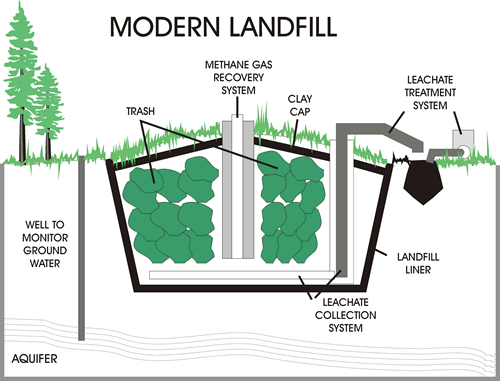
Landfills are actually like condominiums or tombs for our garbage. In the old days we had dumps. Anything and everything was thrown into a pile. Some places burned the garbage and others covered it up.
The problem was that there were no safeguards in place. Poisons could leach out of the dumps and into our water. Dumps were stinky places and often breeding grounds for disease-carrying insects and rodents. Today landfills are constructed. A lengthy process including an environmental impact study in which many experts such as geologists, biologists, social scientists and engineers scrutinize the effect of the landfill on the natural and social environment.
Landfills are lined with clay and plastic to prevent leachate or garbage-juice from leaking out. They are actually designed to slow down decomposition. A series of tubes and pipes are included underneath, through and around the landfill. These pipes collect the leachate to treat it so that it doesn’t containment water. Some of the leachate turns to methane gas and is vented through the pipes.
Each day the garbage at a landfill is covered with soil, which helps prevent odors and pests. This process is repeated until a section or cell is full. One landfill has many cells. When it is full it is capped off with clay and soil. It still needs to be monitored for future years.

Prof. Cricket wonders, “If a steak bone with meat on it is thrown in our kitchen garbage can, then to our alley trash can; picked up by our garbage truck and then transported and dumped into a sanitary landfill, which is later sealed and capped, will there still be meat on the bone 15 years later?”
An Anthropology professor at the University of Arizona, William L. Rathje, conducted several archeological excavations on landfills in Arizona, California and Illinois. This was named, “The Garbage Project.” He said of landfills, “They are vast mummifiers.” His team found readable newspapers, hot-dogs and a T-bone with meat and fat on it.
This archeological projected showed that a well-designed and managed landfill slows biodegration of some organic garbage to a standstill. Some never did start to biodegrade.
According to the EPA Americans throw away 25 percent of the food we prepare. This amounts to 96 million pounds of food waste. It costs us $1 billion.So while today’s landfill is a way to protect our water supply from dangerous pollutants and also prevent disease-carrying vermin. They aren’t a very good way to return organic materials to the earth.

Tuesday, May 13, 2008

Dogs' use of outdoors as bathroom affects our water


This photo is fromDuluthStreams.org

Until recently, the only reason I picked up Prof. Cricket's dog-doo was as a matter of courtesy for my neighbors. I thought it was unsightly, a hazard to people who might accidentally step on it. It wasn't until Marnie Lonsdale Duluth, Minn city employee and Project Lead, City Administrative Lead, Stormwater Plan Links came to visit my United Methodist Women's circle earlier this year that I realized that dog waste is a health hazard. It gets carried by runoff water into everyone's water supply hurting humans, lakes, rivers and aquatic life.

"But wild animals poop in the woods in nature," you may say. This is true, but we human's have more pet population in a small land area compared to the population of animals in the wild. It is estimated that 40 percent of Americans own a dog. In Duluth it is estimated that 125 dogs live within a square mile.

Your dog's business is everyone's business
I am embarrassed to admit that I never saw the need to pick up dog doo in my own yard if I didn't feel like it. I thought it was my yard and my dog's business was no one else's business. I thought that the rain dissolved it and it "biodegraded" and returned to the land. I was wrong. Bacteria from pet droppings ends up in the water supply.

This spring I was walking Prof. Cricket when I met an elderly couple who were so upset by the the piles of dog doo in front of their house that they had shovels and were flinging the excrement onto the street. This was actually making the situation worse. Cars were driving over the excrement and it was taken by the water of the melting snow straight to the storm sewers and into Lake Superior.

It is important to pick up the dog doo to prevent contamination of water. But if you read Prof. Cricket's previous post about mummifying our garbage in landfills, you might wonder whether or not the dog doo biodegrades even if you use biodegradable bags. Biodegradable material relies on microbial action for degradation. Microbes require moisture, oxygen and elevated temperature for survival. Landfills are designed to exclude moisture and compaction reduces oxygen. A majority of dog waste bags end up in landfills. A brand named Mutt Mitt labels itself "degradable" and says, Mutt Mitts include additional degradants and will degrade even in a landfill.

Flushable bags
Some bags are designed to be flushed down the toliet. I would double check with the city or the person in charge of your spectic system before doing this. Here are some companies that sell flushable bags: The Flushable Bag™ and Handicapped Pets

Dog doo composters
If you live in suburbia you can even purchase an underground doggie doo composter. Check outDoggie Dooley , Pet D Posit or a City Farmer site


Different cities handle this question in other ways. Here are the options in Duluth: • flushed down the toilet (be sure to pick out rocks and sticks first) • put in the trash or • buried in your own yard. If you want to bury pet waste, make sure it is in a hole at least 6 inches deep, away from vegetable gardens and water sources, and in permeable soil (not clay). Do not add it to compost piles.

Honey Bees on Strike!?


Cartoon creator Mike Adams www.NaturalNews.com 
Why are the honey bees disappearing?

Monday, May 12, 2008

Can you be an environmentalist AND a tidy housekeeper?

I used to find it hard to be both an environmentalist and a clean, tidy housekeeper, but I am getting better.

It is so hard for me to throw away items that I think could be reused. The best way I have found to get around this is to do not bring "stuff" into the house in the first place. Maybe President Bush wouldn't agree with me, but I have cut down on shopping. If I don't bring it home, it can't clutter up my home or pollute the environment when I decided I don't need it anymore.

When I do shop, I try to keep the money going back into the local economy and have the least amount of environmental impact.

I am getting much better than I used to be. If a person is clean and organized in the first place it is so much easier to consume less and locate items you need. Two sites that have helped me get a handle on this are :
Flylady.net
Messies.com

Go ahead and eat out, just avoid disposable dishes

My husband and I don 't eat out that often, but last night we were both really hungry and he was craving a hamburger. He wanted a Wendy's burger. I am trying not to create a demand for mass marketed beef products. He told me if we went to Wendy's I could order a salad. He was correct. But I knew that it would be served on a disposable dish with disposable utensils.

We ended up going to Perkins. He got his hamburger. I order my salad.
It has been ages since we have been out to eat. We both got what we wanted. We didn't use any disposable dishes. I did NOT push my "no non-grass-fed beef" beliefs on my husband, and we left the young woman, (who is probably working he way through college) a nice tip.

Friday, December 21, 2007


Merry Christmas!
I enjoyed meeting new green people this year and having occasional email contact with you. Have you been able to implement any green practices this Christmas Season?
My husband and I wanted to participate in the "Buy Nothing" Christmas program. But that is really hard. So far I have been able to winnow down and help the environment by purchasing locally made gifts.
I went to my UMW's annual craft bazaar and purchased locally made crafts and/or other goods. This included: soap, candles, jewelry, tablecloths, pot-holders and canned items.
My husband purchased some playing cards for his family made by an artist who attends our church, Gary Lundstrum who owns Great Lakes Design. I also went to a couple art events. Our friend, Wendy Grethen organized a "Get it Local" event which was well attended even though it was a stormy day.
If it is too late now for you to do something similar, perhaps you will remember for next year.

Thursday, October 25, 2007

Tour of an environmental home in Nickerson, Minnesota


Hello everyone,

Prof. Cricket and I asked our friend to write a story about a environmentally conscious family and their home in Nickerson, Minn. We hope you enjoy this article about sustainability.


Caption: CERT participant, Chris Reed, by his greenhouse in Nickerson, Minn. (Photo by Wendy Grethen)

By Wendy Grethen

The Clean Energy Resource Team project
is your opportunity to play a role in shaping energy conservation and renewable energy implementation for your region of Minnesota . A growing number of Minnesotans envision an energy future built on using energy wisely and generating energy from local renewable resources like wind, solar, biomass, and even hydrogen from renewable sources. By relying more on community-scale renewable energy resources and energy conservation, communities can help prevent pollution and create local economic development opportunities.


The CERTs (Clean Energy Resource Team) held an Open House tour of the Reed Family home in Nickerson , MN on October 18. About 20 people attended and were shown several aspects of the home and operation that lead to a more environmental friendly practice. The family has been living on the site since the early 1980’s and it has been powered using renewable energy since 1981. The off grid home uses solar and wind (120 foot tower) power and is completely off grid. The Reeds have used a solar wind combo for their energy supply with about 50% of the electricity is generated by the wind turbine, 45% from the PV array and the remainder of the electric needs comes from a propane powered generator. Electric use for the home is about 270 kWha per month.


Their 3400 square foot log home has a heated in floor hydronic heating system using wood and propane boilers and a wood fireplace. Extra effort has been put in to extensive use compact fluorescent light and having good air sealing and re-insulating their roof. On the lower level, the Reeds have (and are still working on it)3 separate cellars to store produce. Each cellar area has a separate temperature and humidity range. A large barrel of water is in one of the cellar rooms to help in regulating the temperature and prevent freezing. A great deal of insulation is in the walls of the cellars to also assist in providing a uniform temperature to store the food.

The tracking solar array is “planted” in their garden area where they grow most of their own veggies. They also have a large hoop house greenhouse which is movable. They created a wooden rail system that allows the hoop house to slide and he shifts the location of the greenhouse depending on the season. Fresh veggies for over half the year? Yes - tomatoes, beets, bok choy, and more can be harvested. Chris has harvested lettuce until the end of November and starting in April using the greenhouse. Chris recommends the book by Elliot Coleman called “Four Season Harvest” as a must read for anyone considering expanding their produce production. He says most of what they do is an experiment. Some “trials” are more successful than others. The Reeds love to share what they are learning with whoever may be interested. Future plans include a solar hot water heating system integrated with the wood and natural gas boilers. Chris is on the CERTS steering committee.


If you live in Minnesota and want to get involved click here.

Friday, July 20, 2007

http://c3.newdream.org" target="_blank">Carbon Conscious Consumer

Please join me by clicking here

Monday, July 16, 2007

What about the Mercury in fluorescent lamps?

Earlier this year I broke a fluorescent light bulb while packing up my display from my talk to the Ogilvie United Methodist Women. Sharon help me put the broken glass in an empty Pringles can. That can is is sitting under my kitchen sink. Yesterday my husband was helping clean because we were having company. He opened the can and saw the broke glass.
I feel guilty because I still haven't taken this to the hazardous waste disposal site in my town which is WLSSD in Duluth.

Click here for PDF on CFLs and disposal in Duluth area

The Western Lake Superior Sanitary
District (WLSSD) provides free recycling
for residential fluorescent bulbs at its
Household Hazardous Waste Facility at 27th
Avenue West and Courtland Street, Duluth,
MN. You may drop off household bulbs and
tubes during open hours. Businesses should
ask about WLSSD’s Clean Shop Program.


Do any of you have this problem? Have you broken a cfl bulb? What did you do with the broken glass...and Mercury?

Do you know where in your town to dispose of it...and do you tell yourself it is not worth the trip?

Please email me and tell me if you think the cfls are worth it.


This article is from the about.com website

Compact Fluorescent Lamps: Health Hazard or Environmental Benefit?
From Larry West,Your Guide to Environmental Issues.Stay up to date!
Recycling CFL mercury a small price to pay for energy, cost and health savings
One of the brightest strategies for everyday household energy savings is using compact fluorescent lamps (CFLs) in place of standard incandescent bulbs.
Unit for unit, compact fluorescent lamps cost more than the incandescent bulbs they replace, but they’re actually much more cost-effective. Because CFLs last up to 10 times longer than incandescent bulbs and use only one quarter to one third as much energy, every CFL you use will save you about $30 over the life of the Click here to read the rest of article on about.com


Thursday, February 22, 2007


There are many steps you can take around your home. You will save money on your energy bill also. Among several items seen here is a brush to clean behind your refrigerator and insulation to put around the pipes coming out of your hot water heater.
Here Naomi visits with the United Methodist Women at Asbury United Methodist Church in West Duluth, Minn. Jan (left) holds up environmentally friendly laundry soap. Naomi is holding conpostable dishes, Barb is holding Organic Housekeeping by Ellen Sandbeck and a CFL bulb.

If you would like Naomi to speak to your group about steps you can take to be a steward of God's earth please contact her at naomi AT sundogpress DOT com

Wednesday, February 14, 2007

http://www.mnstate.edu/publications/swimmingpool.htm

Minnesota State University News Feature

Karen Branden and Dennis Jacobson by thier thermal mass swimming pool.
Capturing heat in a recreational thermal mass…A SWIMMING POOL HEATS THEIR HOUSEWhen the oil crisis hit in the early 1970s, Dennis Jacobs had a choice. Either sink into an addiction to high-energy costs, or swim against the stream in search of alternatives.
He chose swim, and now he and his wife Karen Branden are enjoying incredibly low heating costs for their 4,000-square-foot home north of Detroit Lakes with the added luxury of swimming all winter in their 16-by-32-foot heated indoor pool.
That’s because the swimming pool heats their house.
It’s called pooling your resources and resourcing your pool.
“When I first installed this heat exchange/thermal mass system 13 years ago, our heating bill for the entire year, supplemented by off-peak electricity, was $180,” he said. “Energy prices have gone up since then, so our annual heating bill now is about $350.”
It’s an ingenious contraption, using a wood stove, a small pump, a series of insulated pipes, passive solar energy and a heat exchanger to raise the temperature in their 22,000-gallon indoor pool, which doubles as a thermal mass. The energy the pool absorbs is released throughout the day to heat the house—by convection, radiation and an occasional boost from a small electric furnace.
Humidity problem? “Not at all,” Jacobs said. “We cover the pool when it’s not in use. In fact, any extra humidity we do have adds to our comfort and health during the dry winter season.”
As the Swedish moderator told Jacobs last month after his presentation on “The Use of a Swimming Pool as a Thermal Mass in Residential Heating” at the International Conference on Fluid and Thermal Energy Conversion in Jakarta, Indonesia: “You just can’t beat the American lifestyle, can you?”
Total cost for the project, including the pool installation: about $13,000, an amount he figures they recouped within the first couple of years.
For Jacobs, a specialist in energy conservation and renewable resources who teaches at Minnesota State University Moorhead’s Corrick Center for General Education, and Branden, a professor in the university’s Sociology department, it’s been one huge experiment.
It was 35 years ago when Jacobs joined the back-to-the-earth movement in the wake of the Arab oil embargo, buying 80 acres of land where his current house sits. The former Peace Corps volunteer then built a geodesic dome there from recycled materials and attached a greenhouse to grow winter herbs and vegetables.
Jacobs, kind of a hybrid Henry David Thoreau/Rube Goldberg philosopher-tinkerer, lived an ascetic lifestyle in the dome until it burned to the ground 15 years ago while he was out of the country. (A friend was using it at the time.)
Then he met Branden, and they began planning to build a modern, super-insulated home on the same site.
“The idea of using a swimming pool as a thermal mass started when I was living in the geodesic dome,” Jacobs said. “In the fall I began planting vegetables in the greenhouse, but soon found that on a sunny day it would reach temperatures above 100 degrees and at night it would drop below freezing.”
So he began looking for a way to moderate the temperatures and decided to try putting a 55-gallon water-filled drum in the greenhouse, which he figured would absorb excess heat during the day and releases it at night.
“I soon noticed the more drums
of water I added, the cooler it stayed during the day and the warmer it stayed throughout the night.”
Bingo! “It was a lesson well learned and I decided to incorporate a very large thermal mass into the design of our new house,” he said.
It took Jacobs and Branden two years to build the home themselves, and 13 years ago they began their grand energy experiment.
The design is simple enough. It starts with a wood burning stove located in a small shed about 50 feet behind their house (for insurance reasons). “We use wood scraps from a local lumber mill, so it doesn’t cost anything to fire up,” he said.
The wood stove heats the water/glycol liquid that’s forced through underground copper pipes by a small 1/12th horsepower pump to a liquid-to-liquid heat exchanger inside the house.
“Before this heated water/glycol mix approaches the heat exchanger, we switch to neopryene valves and stainless steel pipes because in the next step the heated water pipes come in contact with the pool water,” he said. “Chlorination, we’ve found, is very corrosive on copper.”
The heat exchanger, a device used to transfer heat from one fluid to another, is the heart of the operation. It works like a car radiator, where water or antifreeze transfers heat to air flowing through the radiator.
Simply put, the hot water pipe runs through the center of the pvc pipe carrying the pool water. That’s where the exchange is made.
“We pump water from the pool into the heat exchanger through two-inch pvc pipes,” Jacobs said. “At this point, we run the heated water/glycol mix through ¾-inch stainless steel pipes we’ve installed inside the pvc pipes that carry the pool water. What happens is that the heated liquid in the stainless steel pipes gives up its heat to the pool water flowing around it. I’ve also added ribbons of stainless steel inside the pipes that carry the heated water/glycol mix, which agitates the liquid to increase the heat exchange.”
By just burning wood on the weekends, Jacobs said, and taking advantage of solar heat coming from our south-facing windows, they can heat the house and keep the pool at a comfortable 70 to 80 degrees throughout the week.
It’s still a work in progress.
“We have a super-insulted house where the walls are rated about a 45 R-value and the ceiling about a 60 R-value,” he said. “But the windows are a problem, even though they’re all low-E, argon-filled and double-paned, they only rate a 3 R-value. So I’m thinking of installing some kind of moveable, insulated shutter system we can use to cut down on heat loss when the sun goes down.”
He’s also intends to tinker more with the heat exchanger and the piping system to make them more efficient. Down the line there’s even a wind turbine and an electric car in the mix.
“In the meantime, we just enjoy the house and love being in the country,” Branden said.And not surprisingly, the pool has become a very popular winter escape.

Tuesday, February 06, 2007

Hello Everyone,

I attended a Chlorine Free Products Association Summit and learned about what some businesses, states and universities are doing to protect our environment.

At this summit we learned or ways to network to gain more power with your purchasing choices. I hope to be adding to this blog soon.

Sunday, December 31, 2006

Every day I come across something that would make good content for Ask Prof. Cricket.

This past week I went grocery shopping at a different grocery story. I had decided that I would make a special meal for my husband because I was finally done with the layout and printing of my newspaper and we needed to celebrate.

I was prepared to purchase foods that were not organic. But I was not prepared for the lack of chooses to be earth -friendly.

It seems no matter where you shop grocers use Styrofoam to package meat. But I decided to get something from the deli also, The twice-baked potatoes looked good. As soon as I asked for two, I realized that the young woman behind the counter was going to place them in Styrofoam. I asked if she could get tin foil. She ended up getting to separate plastic containers for the two potatoes. I was going to get another side dish, but was disheartened by all the packaging I was using for this special meal.

I guess we will just have to plan ahead to reduce the amount of packaging we use. We all like convenience. As I shopped, I saw some people who attend my church. I realized that if this is their neighborhood grocery store, they are not given many options to stay earth friendly in their purchases.

As I walked from the meat counter to the deli, I went through the laundry aisle. Almost every detergent is packaged in a plastic jug. I wondered how much oil is used to produce those jugs and do they ever get reused or recycled? I use a product that can be brought back to the store and is refilled there. I also get a dollar off when I do that.

The store was also giving away free coffee. The cups are provided by Arco and our Styrofoam. I loved coffee, but I nixed the idea.

In the end I just went home disgusted with myself for waiting for the last minute to prepare a meal and resorting to convenience. And disgusted that the majority of people in my town don't have choices at their neighborhood grocery store.
Every day I come across something that would make good content for Ask Prof. Cricket.

This past week I went grocery shopping at a different grocery story. I had decided that I would make a special meal for my husband because I was finally done with the layout and printing of my newspaper and we needed to celebrate.

I was prepared to purchase foods that were not organic. But I was not prepared for the lack of chooses to be earth -friendly.

It seems no matter where you shop grocers use Styrofoam to package meat. But I decided to get something from the deli also, The twice-baked potatoes looked good. As soon as I asked for two, I realized that the young woman behind the counter was going to place them in Styrofoam. I asked if she could get tin foil. She ended up getting to separate plastic containers for the two potatoes. I was going to get another side dish, but was disheartened by all the packaging I was using for this special meal.

I guess we will just have to plan ahead to reduce the amount of packaging we use. We all like convenience. As I shopped, I saw some people who attend my church. I realized that if this is their neighborhood grocery store, they are not given many options to stay earth friendly in their purchases.

As I walked from the meat counter to the deli, I went through the laundry aisle. Almost every detergent is packaged in a plastic jug. I wondered how much oil is used to produce those jugs and do they ever get reused or recycled? I use a product that can be brought back to the store and is refilled there. I also get a dollar off when I do that.

The store was also giving away free coffee. The cups are provided by Arco and our Styrofoam. I loved coffee, but I nixed the idea.

In the end I just went home disgusted with myself for waiting for the last minute to prepare a meal and resorting to convenience. And disgusted that the majority of people in my town don't have choices at their neighborhood grocery store.

Sunday, November 12, 2006

Stop using dryer sheets


From: http://www.newstarget.com/artificial_fragrance.html
News about the abuse of fragrance chemicals in perfume, personal care products and moreA public education site of the NewsTarget Network, where information is empowerment™This is an open source site. The article below may be reprinted with credit and a clickable link.
Warning: many dryer sheets contain cancer causing chemicalsAmerica has a love affair with artificial fragrance and products that contain it. The amount of fragrance that goes into the average household in America is absolutely astounding. It’s found in all sorts of products but one of the most common is dryer sheets. As it turns out, dryer sheets are absolutely loaded with artificial fragrance. In fact, they serve more of a function of perfume sheets than any other practical function in the dryer.
When people use dryer sheets, they are coating their cloths with a thin film of artificial chemical perfumes. Just like other perfumes, a person’s sensitivity to these perfumes decreases over time to the point where they don’t even notice how potent these artificial fragrance chemicals are.
None of this would be interesting if it weren’t for the fact that these fragrance chemical are extremely toxic chemicals. They are known carcinogens. They cause liver damage and cancer in mammals. In fact, the only way they are approved for use in consumer products is that there is an underlying, but false assumption by the FDA and other regulator agencies that cosmetic products such as shampoo, deodorants, creams, laundry detergents, and soaps don’t pose a health risk because their chemicals are not absorbed through the skin. In other words, there is a much lower threshold of danger assumed with cosmetic products versus foods and beverages. It is assumed that chemicals put on the skin don’t necessarily penetrate the skin. This assumption is incorrect, however.
Nearly every chemical that touches the skin finds its way into the body and into the bloodstream. As a result, wearing toxic fragrance chemicals is actually quite similar to eating them. These toxic chemicals would never, of course, be approved as safe food ingredients due to their toxicity. Many are registered as EPA toxins. Nearly all are listed in the government RTECS database of toxic chemicals (see http://www.nisc.com/cis/details/rtecs.htm for more info). Yet they are, for some reason, allowed to be used in consumer products simply because it is assumed they pose no hazard to human health.
A rigorous examination of the toxic chemicals used in artificial fragrance, such as over-the-counter perfumes, has turned up shocking reports showing as many as twenty-three identifiable carcinogenic compounds. A partial list is found at http://www.immuneweb.org/articles/perfume.html
This means that these fragrance products contain not just one cancer causing agent but potentially dozens. That’s why using dryer sheets or even laundry detergent with fragrance is extremely bad for your health.
Years ago, people argued with the very idea that such chemicals could be absorbed through the skin. They said the skin is a strong barrier against external agents. Otherwise, they explained, the body would be invaded be bacteria and viruses on a daily basis. But then along came the nicotine patch and other federally approved drugs and consumer products that worked on the very premise that drugs can be absorbed through the skin. In fact, if chemicals weren’t absorbed through the skin, the nicotine patch wouldn’t work at all.
Today, even though it is obvious to any intelligent person that chemicals are quite easily absorbed through the skin, there’s no general recognition that products that come into contact with the skin of consumers could pose a potential health hazard. The FDA, it seems, is once again asleep at the wheel. A person who uses dryer sheets or laundry detergent with fragrance is actually coating their clothing in a layer of chemicals that will be easily transferred to their skin the next time they put on those cloths and start to perspire. The wetter your body becomes, the more easily the chemicals can move from clothing into your skin. And since many of these chemical compounds are by themselves solvents, they are rather good at moving through cellular membranes and entering tissues of the body, including nervous system tissues. This is why intelligent consumers who wish to protect their health avoid brand name dryer sheets, laundry detergents, and even perfumes and colognes that are all made with toxic fragrance chemicals that can cause cancer, liver disorders, Alzheimer's disease and many other chronic diseases.

Related articles:
Warning: many dryer sheets contain cancer causing chemicalsPublished December 5 2004America has a love affair with artificial fragrance and products that contain it. The amount of fragrance that goes into the average household in America is absolutely astounding. It’s found in all...
Elizabeth Arden receives a 5-star rating from Business Week for new marketing campaignPublished March 2 2005By signing such figures as Britney Spears and Jeff Gordon to its list of celebrity endorsers, Elizabeth Arden is positioning itself for excellent growth in 2005, according to Business Week. Already...
Highly toxic chemicals are found in laundry detergents, dryer sheets, deodorants, perfumes, soaps and other household productsPublished May 17 2004As part of National Poison Prevention Week, health officials are warning parents to keep their children away from household poisons. That's good advice, of course, but sadly very little attention...
Taste inflation revealed: why sugar, salt and fragrance make you stupidPublished October 18 2005America is a nation that suffers from "taste inflation." Virtually all prepared foods in this country, whether they're restaurant foods or convenience foods, are made with such outrageous levels of...
Artificial fragrance in shampoos and soaps damages aquatic wildlife downstreamPublished December 2 2004It's yet one more reason to avoid personal care products containing artificial fragrance. And even if you don't care about the fish downstream, consider the fact that these toxic chemicals are also...
Aromatherapy can be used to treat many ailments and aid in relaxationPublished March 6 2005Each fragrance has an effect on a different part of the brain. Eucalyptus can be used to loosen chest congestion while lavender is a good treatment for insomnia. When trying out a particular...

Sunday, November 05, 2006

Tuesday, October 24, 2006

Tuesday, October 17, 2006

News Flash


News Flash
News Flash
News Flash

UMW Green Team Member breaks her fast of no Styrofoam.

Read all about it here.

Professor Cricket has the exclusive detials. Read it here.

Find out what made her fall. Why she was tempted? Will she cheat again? Only Professor has access to the details to this sorrid tale.

Tuesday, August 15, 2006

Ask Prof. Cricket

Today I am visiting my aunt and uncle in Minneapolis. While I was helping my aunt in the kitchen, I found out that they compost their food and yard waste. My uncle showed me his composters which he got for a reduced price from the city. Right now he is mowing his lawn with an electruc mulcher. I took photos of this also and I will post this to the website.

Saturday, August 12, 2006


Sign up for Prof. Cricket weekly newsletter


Email:


Dog's use of the outdoors as a bathroom affects our water

This photo is from DuluthStreams.org

Until recently, the only reason I picked up Prof. Cricket's dog-doo was as a matter of courtesy for my neighbors. I thought it was unsightly, a hazard to people who might accidentally step on it. It wasn't until Marnie Lonsdale a Duluth, Minn city employee and Project Lead, City Administrative Lead, Stormwater Plan Links came to visit my United Methodist Women's circle earlier this year that I realized that dog waste is a health hazard. It gets carried by runoff water into everyone's water supply hurting humans, lakes, rivers and aquatic life.

"But wild animals poop in the woods in nature," you may say. This is true, but we human's have more pet population in a small land area compared to the population of animals in the wild. It is estimated that 40 percent of Americans own a dog. In Duluth it is estimated that 125 dogs live within a square mile.

Your dog's business is everyone's business
I am embarrassed to admit that I never saw the need to pick up dog doo in my own yard if I didn't feel like it. I thought it was my yard and my dog's business was no one else's business. I thought that the rain dissolved it and it "biodegraded" and returned to the land. I was wrong. Bacteria from pet droppings ends up in the water supply.

This spring I was walking Prof. Cricket when I met an elderly couple who were so upset by the the piles of dog doo in front of their house that they had shovels and were flinging the excrement onto the street. This was actually making the situation worse. Cars were driving over the excrement and it was taken by the water of the melting snow straight to the storm sewers and into Lake Superior.

It is important to pick up the dog doo to prevent contamination of water. But if you read Prof. Cricket's previous post about mummifying our garbage in landfills, you might wonder whether or not the dog doo biodegrades even if you use biodegradable bags. Biodegradable material relies on microbial action for degradation. Microbes require moisture, oxygen and elevated temperature for survival. Landfills are designed to exclude moisture and compaction reduces oxygen. A majority of dog waste bags end up in landfills. A brand named Mutt Mitt labels itself "degradable" and says, Mutt Mitts include additional degradants and will degrade even in a landfill.

Flushable bags
Some bags are designed to be flushed down the toliet. I would double check with the city or the person in charge of your spectic system before doing this. Here are some companies that sell flushable bags: The Flushable Bag™ and Handicapped Pets

Dog doo composters
If you live in suburbia you can even purchase an underground doggie doo composter. Check out Doggie Dooley , Pet D Posit or a City Farmer site


Different cities handle this question in other ways. Here are the options in Duluth: • flushed down the toilet (be sure to pick out rocks and sticks first) • put in the trash or • buried in your own yard. If you want to bury pet waste, make sure it is in a hole at least 6 inches deep, away from vegetable gardens and water sources, and in permeable soil (not clay). Do not add it to compost piles.

Thursday, August 10, 2006


Yesterday, I brought in my empty Restore dish washing detergent bottle and refilled it. Wow! that was cool. You lift up a plastic window-type thing. Place your bottle down. A metal pipe-type thing comes down and flashes red light on it to read what product is supposed to go in the bottle....then it refills it and prints a dollar off coupon.

Wednesday, August 09, 2006

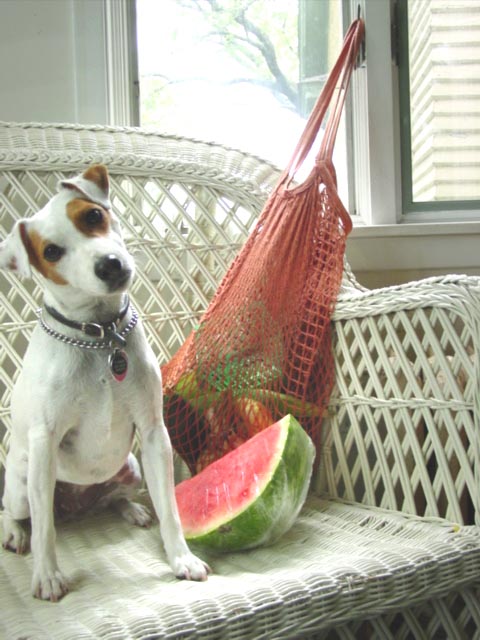
Prof. Cricket asks you to BYOB...bring your own bag


"Why do humans use a new bag every time they go grocery shopping? "
BYOB
Bring your own shopping bag
My friend, Carol, from a suburb in the Washington, DC area wrote me a snail mail letter the other day. She told me four things she is doing to save on consumption and waste. She wrote.
"# 4. This is the hardest: remember to take a shopping bag with you & remember to tell the clerk BEFORE they ring you up that you DO NOT need a bag. This is very hard to remember. I often catch them as they're putting my purchases into t abag but I suspect they just throw away the now mussed up bag!"

In the past few weeks, Rebecca and I certainly have found this to be true in most stores. The clerks and the bag people think you are crazy. The seem to have no idea why a person would bring their own bag.

My husband thinks I spend to much money at our Whole Foods Coop in Duluth. So to placate him. I shopped at the Jubilee on Superior St yesterday afternoon. I tried to stay within my values of avoiding excessive packaging. I grabbed a shopping basket and started in the produce aisle. I picked out three ears of corn still in the husks. I started to grab a plastic bag to place the corn in, but then I figured, "They are already in mother nature's protective coating...Why waste a plastic bag." So I just place them in by hand held basket. Then I saw some melons, thinking they would make a good dessert, I started to grab a package of a one-half musk melon, one-half, cantaloupe and a section of watermelon. As I reached for it I noticed that the melons all rested a black Stryrofoam plate-type (like is used for meat) So I decided to get a cut watermelon wrapped in plastic...No Styrofoam used to hold it up.

As I maneuvered around the store, I noticed many items were packaged with plastic. I wondered what I could get for a treat. I settle on some Eddy's ice-cream which was on sale for only $1.00 a pint. It is packaged in a cardboard container.

I informed the cashier that I had my own mesh bag. I put it right on top of a cardboard box so that the bagger or carrier out person would see. As soon as I saw the bag person I informed him of my own bag. He tried to but my corn-on-the-Cobb, still-in-the-husk in my bag, but it was too awkward.

"I will just stick them in this plastic bag," he said.

"No," I said. Let me bag the items. It's okay. " He seemed relieved and went to help at another checkout counter.

I thought about telling him why I was using my own bag, but I don't think he was in the mood.

Today I went to the Farmer's Market, which is only one-and-one-half block from my house. I again purchased some corn-on-the-cobb still in the husks. Again, the farmer wanted to place the corn in a plastic bag. I moved onto another farmer's booth. This farmer either understood what I was doing, or thought I was eccentric. He let me place them in my own bag. I treated myself by purchasing one single stem of a sunflower.

I was ready to leave when I noticed some young women, I am acquainted with wrapping snapdragon stems in newspaper. "Oh," people who are environmentally friendly. I should reward them." So I went over and purchased a little bouquet from them.

When I mentioned to the vendors that I appreciated their use of the newspaper, one said to me. Did you know 1 million plastic bags are thrown away every minute?" I am not sure where she gets her facts....but Prof. Cricket will look into it.

Ohio DNR Recycling Plastic

Plastic bags are like nuke waste

Are plastic bags sacking the environment? National Geographic

Tuesday, August 08, 2006

Monday, August 07, 2006


Sign up for "Ask Prof Cricket" weekly newsletter


Email:


Mummifying our trash
Landfills: protection by storage


When we talk about helping the environment often times we speak about recycling instead of “landfilling” our trash or garbage. This July, Rebecca and I started composting our food waste. Composting is a way of recycling nutrients back to the earth.
One of the display items we showed during our Green Team presentations this summer was a food waste collection container loaned by Western Lake Superior Sanitary District (WLSSD) for special occasions like weddings, picnics and graduations. It really isn’t that special. It is just a large plastic garbage can lined with a biodegradable plastic bag. The container is returned to WLSSD and the food scraps are composted.
This project prompted an excellent question for Prof. Cricket from an Iowa woman. She asked, “Why don’t food and yard waste return to the earth in a landfill when they do in a compost pile?”
To understand why landfills don’t compost our waste, Prof. Cricket will give a mini-lesson in the construction of a landfill.
Landfills are actually like condominiums or tombs for our garbage. In the old days we had dumps. Anything and everything was thrown into a pile. Some places burned the garbage and others covered it up.
The problem was that there were no safeguards in place. Poisons could leach out of the dumps and into our water. Dumps were stinky places and often breeding grounds for disease-carrying insects and rodents. Today landfills are constructed. A lengthy process including an environmental impact study in which many experts such as geologists, biologists, social scientists and engineers scrutinize the effect of the landfill on the natural and social environment.
Landfills are lined with clay and plastic to prevent leachate or garbage-juice from leaking out. They are actually designed to slow down decomposition. A series of tubes and pipes are included underneath, through and around the landfill. These pipes collect the leachate to treat it so that it doesn’t containment water. Some of the leachate turns to methane gas and is vented through the pipes.
Each day the garbage at a landfill is covered with soil, which helps prevent odors and pests. This process is repeated until a section or cell is full. One landfill has many cells. When it is full it is capped off with clay and soil. It still needs to be monitored for future years.

Prof. Cricket wonders, “If a steak bone with meat on it is thrown in our kitchen garbage can, then to our alley trash can; picked up by our garbage truck and then transported and dumped into a sanitary landfill, which is later sealed and capped, will there still be meat on the bone 15 years later?”
An Anthropology professor at the University of Arizona, William L. Rathje, conducted several archeological excavations on landfills in Arizona, California and Illinois. This was named, “The Garbage Project.” He said of landfills, “They are vast mummifiers.” His team found readable newspapers, hot-dogs and a T-bone with meat and fat on it.
This archeological projected showed that a well-designed and managed landfill slows biodegration of some organic garbage to a standstill. Some never did start to biodegrade.
According to the EPA Americans throw away 25 percent of the food we prepare. This amounts to 96 million pounds of food waste. It costs us $1 billion.So while today’s landfill is a way to protect our water supply from dangerous pollutants and also prevent disease-carrying vermin. They aren’t a very good way to return organic materials to the earth.

Friday, August 04, 2006


Naomi and Rebecca Yaeger-Bischoff speak about what people can do to protect God's earth during a UMW Green Team presentation in Marshalltown, Ia.
Click here to join Ask_Prof_Cricket
Click to join Ask_Prof_Cricket